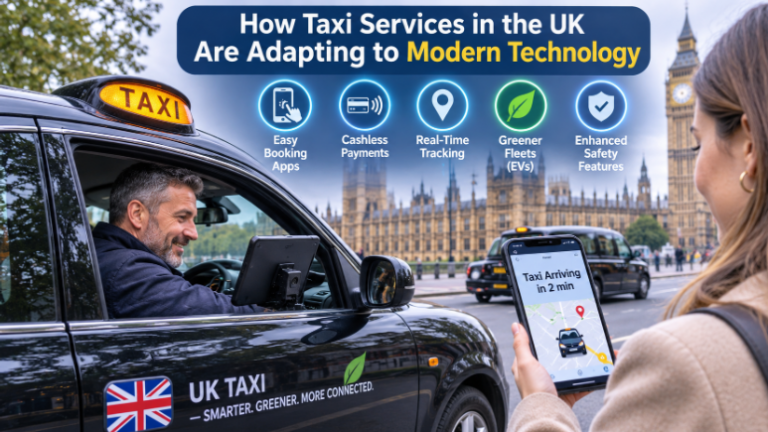
As technology changes how people book, manage, and enjoy travel, the UK taxi sector is undergoing tremendous change. Modern technology is improving the convenience, effectiveness, and dependability of taxi services through everything from GPS tracking and sophisticated booking systems to mobile booking apps and online payments.
Passengers today have higher expectations than just going from one place to another. They desire prompt reservations, clear pricing, skilled drivers, and real-time trip updates. Technology is assisting taxi firms in fulfilling customers’ demands, whether they are for a business trip, an airport transfer, or a neighbourhood taxi.
In this piece, we examine how UK taxi services are adjusting to contemporary technology, the most recent advancements in the sector, and the implications for travellers.
1. Mobile Apps Are Changing the Way Passengers Book Taxis
The advent of mobile booking apps is one of the most significant technology advancements in the taxi sector. In the past, travellers frequently had to call a cab service, wait for a representative to answer, and describe the specifics of their trip.
These days, the process is a lot easier thanks to mobile apps. Customers can use their smartphones to hire a cab in a matter of minutes.
Several helpful features are provided by contemporary taxi booking apps:
- Online reservations are quick and easy.
- Instantaneous fare estimations prior to departure.
- Details on the vehicle and the driver.
- Journey tracking in real time.
- Digital confirmations of reservations.
- Several ways to pay.
For instance, when clients look for a Taxi near me, they increasingly anticipate being able to locate local taxi services, look up approximate costs, and schedule a pickup without having to make a phone call.
These apps are making daily travel more convenient and assisting taxi businesses in enhancing client experiences.
2. Advanced Taxi Dispatch Systems Improve Efficiency
In addition to altering how customers reserve taxis, technology is also affecting how taxi companies run their businesses.
A contemporary taxi dispatch system enables operators to use a single platform to handle reservations, assign drivers, and track trips.
Conventional dispatch systems frequently depended on drivers and office personnel communicating manually over the phone. Delays, incorrect reservations, and ineffective car distribution could arise from this.
A more structured method is provided by contemporary dispatch technology.
Among the crucial characteristics are the following:
- The driver is assigned automatically.
- GPS tracking in real time.
- Travel and reservation administration.
- Monitoring driver availability.
- Automated notifications for customers.
- Booking records are centralised.
These features can have a big impact on taxi businesses that operate in major UK cities.
For instance, the dispatch system may find suitable available drivers based on their location and availability when a consumer requests a route, which minimises needless waiting and boosts operational effectiveness.
3. GPS Tracking Makes Taxi Journeys More Convenient
More and more passengers want to know when and where their cab will be arriving. This is made feasible by GPS technology, which enables real-time car position monitoring for both clients and taxi operators.
GPS tracking allows clients to:
- See where their driver is.
- Get an estimated time of arrival.
- Observe their path.
- Provide details about the trip.
- Steer clear of needless waiting outside.
In crowded places like London, where traffic congestion and shifting circumstances can impact travel times, this technology is very helpful.
Real-time tracking makes ordering a taxi London more convenient and facilitates better trip planning.
Additionally, GPS technology helps taxi drivers track cars, plan better routes, and control driver behaviour.
4. Airport Taxi Services Are Becoming More Technology-Driven
Another area where technology is having a significant impact is airport transportation. Reliable transportation is essential for travellers, particularly when taking flights or landing in the UK after lengthy trips.
A contemporary Airport Taxi technology can be used by the service to improve the convenience and organisation of airport transfers.
Among the helpful digital features are the following:
Online reservations in advance.
- Flight monitoring and arrival updates.
- Automated confirmations of reservations.
- Details on the driver and car.
- Digital payment methods.
- Coordination of pickup.
Because flight arrival times are subject to change, flight monitoring is very useful. Taxis can better organise airport pickups and handle delays by monitoring flight information.
Digital journey management and prior booking are advantageous for travellers heading to Heathrow, Gatwick, Luton, Stansted, and London City airports.
These advancements facilitate airport transfers and lessen travel-related anxieties.
5. Digital Payments Make Taxi Travel Easier
Passengers in taxis now have more options than just paying with cash. Travel payment is now quicker and easier thanks to digital payment technology.
Nowadays, a lot of taxi services take:
- Credit and debit cards.
- Apple Pay.
- Google Pay.
- In-app purchases.
- Contactless transactions.
International tourists, business travellers, and travellers who would rather not carry cash will find digital payments very useful.
Additionally, they facilitate consumers’ ability to keep track of their travels and payments.
Digital payment solutions can streamline transactions, lessen the need to handle cash, and enhance the overall booking experience for taxi firms.
6. Artificial Intelligence Is Supporting the Taxi Industry
In the transportation sector, artificial intelligence (AI) is becoming more and more significant. In order to enhance customer service, booking administration, and operational planning, taxi businesses are investigating AI-powered solutions.
Here are a few instances:
AI-powered customer support:
Common enquiries concerning reservations, prices, pickup locations, and service availability can be addressed by chatbots.
Smarter route planning:
To help drivers avoid delays, intelligent technologies can evaluate traffic data and recommend different routes.
Demand forecasting:
By analysing booking trends, AI systems can assist businesses in determining when and where taxi demand is most likely to rise.
Automated booking management:
Automation can be used by businesses to manage client notifications, reminders, and booking confirmations.
AI can help businesses increase productivity and offer quicker customer service, even though it cannot completely replace a cab operator’s job.
7. Technology Is Improving Passenger Safety
The UK taxi business continues to place a high premium on passenger safety. Additional technologies made possible by modern technology assist businesses in enhancing accountability and safety.
Among the beneficial advancements are:
- Vehicle tracking using GPS.
- Digital driver identification.
- Electronic reservation records.
- Features for sharing journeys.
- Systems for driver communication.
- Vehicle safety technology.
Prior to their trip, passengers can obtain information about the driver and the vehicle, which facilitates the identification of the taxi they have been assigned.
Additionally, digital records assist taxi drivers in responding to client enquiries and keeping booking information organised.
However, crucial safety standards like proper driver licences, vehicle inspections, and operator adherence to local licensing regulations should be supported by technology rather than replaced by it.
8. Electric Vehicles and Sustainable Taxi Travel
The way taxi services function in the UK is also being impacted by environmental concerns.
To lessen their influence on the environment and satisfy evolving transportation needs, many taxi companies are thinking about switching to electric or low-emission vehicles.
Electric taxis have a number of possible advantages:
- Lower emissions from the tailpipe.
- Quieter travel.
- Lower energy expenses under specific operating circumstances.
- Encourage more environmentally friendly urban transportation.
Additionally, technology is making it easier for drivers to find charging stations, keep an eye on battery levels, and make more efficient travel plans.
Electric vehicles are becoming a more significant component of the future of the taxi industry in cities like London, where clean-air initiatives and emissions rules affect transportation options.
9. What Does the Future Hold for UK Taxi Services?
Continued technological advancement will be crucial to the UK taxi industry’s future.
Passengers may see even more sophisticated booking apps, automated dispatch processes, more intelligent trip planning, and customised travel services in the upcoming years.
Investing in contemporary technology will put taxi businesses in a better position to adapt to shifting consumer demands.
But launching an app is not enough to achieve a successful digital transformation. Additionally, companies need to prioritise dependable drivers, open pricing, prompt customer service, and consistent service quality.
In the end, businesses that integrate technology with top-notch customer support will have an edge in the very competitive UK transportation sector.
Conclusion: Book Your Next Taxi with Confidence
In the UK, taxi services are changing due to modern technologies. Taxi trips are becoming easier and more effective because of mobile booking apps, sophisticated dispatch systems, GPS monitoring, digital payments, and artificial intelligence.
Modern taxi services provide additional options to plan your trip with assurance, whether you need transportation throughout London, an airport pickup, or a local trip.
Selecting a taxi business that combines cutting-edge technology with skilled drivers and dependable customer service might make all the difference as the industry continues to change.
Looking for a reliable taxi service in London? Visit Minicabs.co.uk to book your next journey. Enjoy convenient online bookings, reliable transportation and straightforward fares.
Book your taxi today and experience a smarter way to travel!
FAQs:
1. How is technology changing taxi services in the UK?
Mobile booking apps, GPS monitoring, digital payments, automated dispatch systems, and AI-powered customer care are all examples of how technology is improving the convenience of taxi services.
2. How does a taxi dispatch system work?
Customer reservations are handled by a taxi dispatch system, which also assigns available drivers. It can assist operators in effectively allocating vehicles by utilising GPS and real-time data.
3. Can I book a Taxi near me using a mobile app?
Indeed. Passengers can enter their pickup location, choose their destination, check anticipated rates, and finalise bookings using smartphone applications offered by numerous taxi firms.
4. How does technology improve Airport Taxi services?
Through online reservations, flight tracking, digital confirmations, GPS tracking, and improved pickup coordination, technology facilitates airport transfers.
5. Is it possible to pay for taxi journeys digitally in the UK?
Indeed. Debit cards, credit cards, contactless payments, Apple Pay, and Google Pay are all accepted by many UK taxi services.