Parking rules in the UK can sometimes be confusing, especially when you see yellow lines on the road.
Many drivers ask whether single yellow line parking is allowed and how the rules differ from double yellow line parking. Understanding these markings is important to avoid fines and ensure safe parking in busy areas.
Single and double yellow lines are used by local authorities to manage traffic flow and prevent congestion.
The rules vary depending on time restrictions, nearby signs, and special permissions such as disabled parking badges.
In this guide, you will learn everything about parking on single yellow lines, parking on double yellow lines, and the important regulations every driver should know.
What Is Single Yellow Line Parking?
A single yellow line painted along the side of a road indicates that parking or waiting is restricted during certain hours. Unlike double yellow lines, the restriction is not always active throughout the day.
With single yellow line parking, the exact restriction times are usually displayed on nearby signs. For example, parking may be restricted during busy hours such as 8:00 AM to 6:30 PM, but allowed outside those hours. Drivers should always check nearby signs before leaving their vehicle.
These lines are often used in areas with heavy daytime traffic such as city centers, shopping streets, and near schools.
Single Yellow Line Parking Rules
Understanding single yellow line parking rules is essential to avoid penalties. These rules are set by local councils and enforced by traffic wardens.
Here are the most important rules drivers should remember:
- Parking may be restricted during specific hours shown on nearby signs.
- Outside the restricted times, parking is usually allowed unless other restrictions apply.
- Loading and unloading may be allowed for a short time unless loading restrictions are in place.
- Drivers must not block driveways, pedestrian crossings, or bus stops.
- Always check nearby signage before parking.
Following these single yellow line parking rules helps drivers avoid fines and ensures roads remain clear during busy times.
When Can You Park on a Single Yellow Line?
Many drivers wonder when parking on single yellow lines is permitted. The answer depends on the time restrictions in that particular area.
If the restriction hours have ended, parking is usually allowed. For example, if a sign says “No waiting 8 AM – 6 PM,” drivers can park there after 6 PM until the restriction starts again the next morning.
In residential areas, parking may be allowed in the evening or overnight. However, in busy commercial areas, restrictions might apply during most of the day.
Always check nearby signs because each road may have different rules.
Loading and Unloading on Single Yellow Lines
In some situations, parking on single yellow lines is allowed for short periods when loading or unloading goods.
For example, delivery drivers may stop briefly to move items between their vehicle and a nearby property. However, this should be done quickly and the driver should remain close to the vehicle.
If there are additional markings such as yellow kerb lines, loading may also be restricted. These markings mean loading is not allowed during certain hours.
Understanding these small details can help drivers follow single yellow line parking rules correctly.
What Is Double Yellow Line Parking?
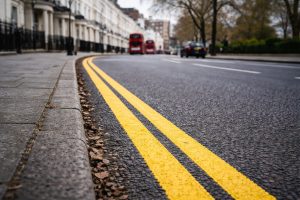
Double yellow lines are another common road marking in the UK. They indicate stricter parking restrictions than single yellow lines.
With double yellow line parking, waiting or parking is usually prohibited at any time of the day or night. This rule applies every day of the week unless signs say otherwise.
These lines are commonly used on busy roads, junctions, and narrow streets where parked vehicles could cause traffic problems or safety risks.
Because of these strict rules, drivers should avoid parking on double yellow lines unless they are stopping briefly for permitted reasons.
Double Yellow Line Parking Rules
The double yellow line parking rules are stricter compared to single yellow line restrictions. Drivers should understand these regulations before stopping their vehicle.
Key rules include:
- Parking is normally not allowed at any time.
- The restriction applies 24 hours a day and seven days a week.
- Short stops for loading or unloading may sometimes be allowed.
- Drivers must not leave their vehicle parked for long periods.
- Local signs or kerb markings may add additional restrictions.
These double yellow line parking rules are designed to keep roads clear and prevent congestion in high-traffic areas.
Is Stopping Allowed on Double Yellow Lines?
Although parking on double yellow lines is not allowed, stopping briefly may sometimes be permitted.
Drivers may stop for activities such as:
- Picking up or dropping off passengers
- Loading or unloading heavy goods
- Emergency situations
However, these stops should be brief and should not cause obstruction to other vehicles. If loading restrictions are shown by kerb markings, even short stops may not be allowed.
Understanding these exceptions can help drivers follow double yellow line parking rules safely.
Blue Badge Parking on Double Yellow Lines
Drivers who hold a disabled parking permit often ask about blue badge parking on double yellow lines.
In many cases, Blue Badge holders are allowed to park on double yellow lines for up to three hours if it is safe to do so and there are no loading restrictions.
However, some conditions apply:
- The vehicle must display the Blue Badge clearly.
- The driver must set the parking clock showing the arrival time.
- Parking must not block traffic or create safety hazards.
- The location must not have loading restrictions indicated by kerb lines.
These allowances help disabled drivers access areas where normal parking spaces may not be available.
Difference Between Single and Double Yellow Line Parking
Understanding the difference between single yellow line parking and double yellow line parking helps drivers follow road rules correctly.
Single yellow lines have time-based restrictions. This means parking may be allowed outside the restricted hours shown on nearby signs.
Double yellow lines, however, usually mean parking is prohibited at all times. Drivers cannot park there unless special exemptions apply.
Because the rules are different, it is always important to check both the road markings and nearby signs before parking.
Penalties for Breaking Yellow Line Parking Rules
Ignoring single yellow line parking rules or double yellow line parking rules can lead to fines known as Penalty Charge Notices (PCNs).
Traffic wardens regularly monitor restricted areas, especially in busy cities. If a driver is caught parking on single yellow lines during restricted hours or parking on double yellow lines without permission, a fine may be issued.
Penalties may vary depending on the location and local authority, but they are usually higher in busy urban areas. Paying attention to road markings can help drivers avoid unnecessary penalties.
Common Mistakes Drivers Make With Yellow Line Parking
Many parking fines happen because drivers misunderstand the rules. One common mistake is assuming that single yellow line parking is allowed at all times.
Another mistake is believing that stopping briefly on double yellow lines is always allowed. In reality, parking on double yellow lines may still be restricted if loading bans are in place.
Some drivers also forget to check signs nearby, which often show the exact restriction hours. Taking a moment to read these signs can prevent costly penalties.
Reliable Minicab Services for Stress Free Travel and Parking Across London
Parking rules like single yellow line parking and double yellow line parking rules can make driving in busy cities stressful.
Using a reliable minicab service helps avoid parking fines and restrictions. Professional drivers understand local traffic rules, parking zones, and restricted areas.
With a trusted service like Minicabs.co.uk, passengers can travel across London comfortably without worrying about parking problems, congestion, or city driving.
Tips for Safe and Legal Parking
Following a few simple tips can help drivers avoid problems with single yellow line parking and double yellow line parking.
First, always check nearby signs before parking. These signs explain the restriction times and any additional rules.
Second, look for kerb markings that may indicate loading restrictions. These markings can affect both parking on single yellow lines and parking on double yellow lines.
Finally, avoid parking in places where your vehicle could block traffic or pedestrians. Safe parking benefits everyone on the road.
Why Understanding Yellow Line Rules Is Important
Traffic systems in busy cities rely on clear parking rules to keep roads safe and reduce congestion. Yellow line markings help manage traffic flow and prevent dangerous parking situations.
Understanding single yellow line parking rules allows drivers to park legally during permitted times. Knowing the double yellow line parking rules also prevents drivers from stopping in restricted areas.
Whether you are driving in residential neighborhoods or busy city streets, following these rules ensures safer roads for everyone.
FAQs
Q. What is the fine for parking on double yellow lines?
The fine for parking on double yellow lines is usually a Penalty Charge Notice issued by the local council. In many UK cities, the charge ranges from about £70 to £130, depending on the location and seriousness of the violation.
Q. Who enforces parking on double yellow lines?
Parking on double yellow lines is usually enforced by local council parking officers. These officers patrol streets and issue penalty notices to vehicles parked illegally. In some cases, police may also enforce rules if the vehicle is causing obstruction.
Q. What is the fine for parking on double yellow lines?
The penalty for parking on double yellow lines normally comes as a council-issued fine. Most drivers receive a Penalty Charge Notice between £70 and £130. Many councils offer a 50 percent discount if the fine is paid quickly.
Q. Can you get points for parking on double yellow lines?
Drivers normally do not receive penalty points for parking on double yellow lines. The offence is usually treated as a civil parking violation handled by the local council. However, if the vehicle causes a serious obstruction, police may take further action
Q. How to report someone parking on double yellow lines?
To report someone parking on double yellow lines, contact your local council’s parking enforcement team. Many councils provide online forms or phone numbers for reporting illegal parking. Providing the vehicle location, time, and registration number helps authorities investigate.